The rise of high potency APIs
This rise is fuelled in particular by oncology therapeutics, where HPAPIs enable effective treatment at lower doses with potentially fewer side effects. In 2025, 35% of new FDA approvals were for cancer therapeutics, which evidences oncology’s role in driving HPAPI demand.
At the same time, advances in medicinal chemistry and structure activity relationship (SAR) modelling, supported by tools such as high-throughput screening, toxicogenomics, and computational biology, have made it possible to design more potent small molecules, further accelerating the adoption and development of HPAPIs and UHPAPIs.
However, HPAPIs are not without risk during their development and manufacture. As potency rises, so does the need for specialised containment measures and rigorous protocols to ensure they can be handled safely. This is where Sterling has built a differentiated position.
What 'potent' means: OELs, OEBs, and risk
HPAPIs are defined by occupational exposure limits (OELs) and occupational exposure bands (OEBs).
OELs – the maximum airborne concentration limit to which most workers can be exposed for eight hours per day, 40 hours per week without the expectation of adverse health effects (e.g. <0.001 µg/m³ or <1 ng/m³)
OEBs – represent a range of concentrations to which a worker could be exposed without the expectation of adverse health effects. It is a range because we don’t have enough scientific information to derive an OEL (OEB 1 is lowest hazard, OEB 5 is extremely hazardous)
Example: OEB 5 corresponds with an OEL of <0.001 µg/m³ or <1ng/m³, some CDMOs, including Sterling, can operate at sub‑ng/m³ levels, sometimes referred to as ultra HPAPI (UHPAPI).
Typically, if a compound requires an OEB below 10 µg/m³ it is considered highly potent.
These classifications determine every part of an HPAPI development and manufacturing programme, including containment strategies and facility design to cleaning protocols to employee training.
What are some of the top challenges when working with HPAPIs
The primary challenge associated with HPAPIs is the need for stringent containment, and controls tailored to the specific risk profile of each project.
Additional measures vary depending on the process. For example, rather than transferring powders from a bag into a reactor, we may first create a slurry within an enclosed glove bag and then transfer it to the reactor through specialised tubing to avoid exposure.
The main challenges when working with HPAPIs are:
- System integrity – many safeguards must be built directly into facility infrastructure, including hard-walled isolators and pressure cascades, and often dedicated suites to stop cross-contamination
- Airflow – ensuring that airflow is controlled will prevent airborne particles, this includes HVAC systems and downflow booths
- Cleaning protocols – selection of appropriate cleaning compounds or solvents, as well as deriving product contact cleaning limits and HPAPI suite non-product contact surface cleaning limits
- Waste management – management of waste is critical due to the hazardous nature of the compounds being used
- Specialised employee training – extensive, continuous training is required not just about HPAPIs in general, but about every highly potent molecule in the facility
At Sterling, our in-house toxicology and industrial hygiene team play a central role in defining strategies for every project, ensuring they align with best practices and project specific data.
These challenges and the need for very specialised infrastructure and expertise means that many pharmaceutical companies turn to outsourced partners for HPAPI projects, to avoid large capital expenditure and the recruitment of specialist expertise.
Read here how you can set up your HPAPI project for success.
Why HPAPIs require advanced containment
At microgram and nanogram exposure levels, traditional PPE and open handling are insufficient. HPAPI manufacturing requires:
- Isolator‑based chemistry
- Closed charging and sampling
- Split‑Butterfly Valves (SBVs)
- Rapid Transfer Ports (RTPs)
- Closed filtration and drying
- SMEPAC‑validated containment performance
A robust containment strategy will ensure that airborne exposure remains below the validated OEL, which is vital to ensuring the safety of employees working in these environments.
At Sterling, we use a multi-layered, risk-based containment strategy that is essential to minimising exposure risk, whilst maximising efficiency. This involves a combination of PPE, closed manufacturing suites, personnel PPE donning and doffing areas, and downflow booths with controlled, unidirectional airflow.
It’s also important to monitor and continuously reassess containment requirements as the project progresses. Any process change requires reassessment of the existing containment measures to determine whether adjustments are needed to maintain appropriate protection.
How might containment strategies change as an HPAPI project scales?
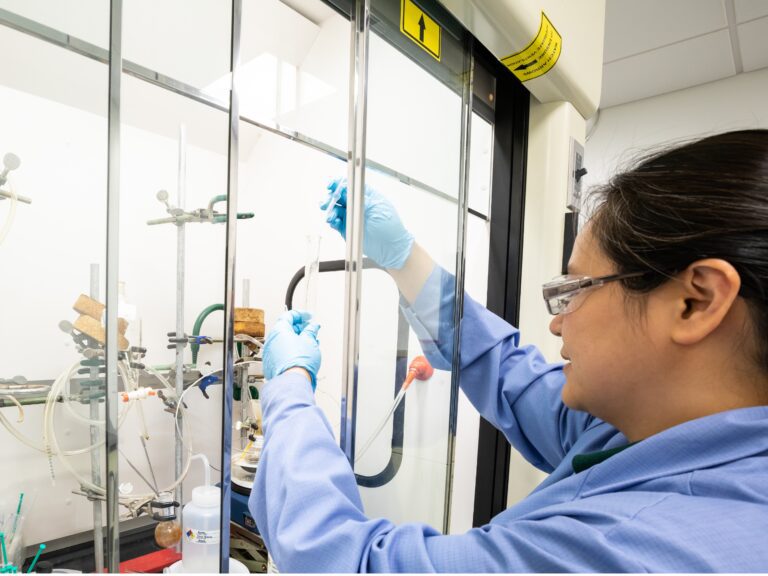
At lab scale, containment typically relies on glove box isolators, ventilated balance enclosures, and fume hoods, which provide effective protection when handling small quantities of potent material. As production moves to plant scale and larger volumes are introduced, more robust measures such as isolated manufacturing suites, pressure controls, and other tailored containment measures become necessary.
It’s important that large scale requirements are considered early in development to help ensure that the process can be safely and efficiently translated to manufacturing and that appropriate engineering controls are identified well in advance.
Read our blog on de-risking HPAPI scale up as we explore the common pitfall and practical solutions.
Sterling's HPAPI capability
OEB 5 development, scale up and manufacturing
Our UK and US sites offer early‑stage to late stage and commercial supply cGMP HPAPI programmes:
- Up to OEB 5 capability with <0.001 µg/m³ (<1 ng/m³) containment
- Large‑scale reactors (up to multi‑thousand litres)
- Isolator‑based development labs
- Closed‑system filtration and drying
- Schedules I–V (schedules 1-5) controlled‑substance licences
- Batch sizes from grams to tens of kilograms
- Rapid, collaborative tech transfer
- Integrated analytical and cleaning validation
- Experienced western regulatory oversight
Sterling offers end‑to‑end HPAPI continuity across development, scale‑up, manufacturing, commercialisation and beyond as molecules mature.
Read more about our HPAPI capabilities here.
Facility design principles that matter
Sterling’s cGMP HPAPI facilities incorporate the design elements regulators look for:
- Segregated potent‑handling suites
- Pressure‑cascade zoning
- Dedicated material and personnel flows
- Decontamination and waste‑handling systems
- ADE/PDE‑driven cleaning validation – derived by board certified in-house toxicologist
- Routine industrial hygiene monitoring
- Acceptable surface limits (ASL) for HPAPI suite cleaning
These are the operational foundations of safe, compliant HPAPI manufacturing.
The regulatory expectations behind HPAPI manufacturing
Regulators and CDMOs follow GMP guidelines for HPAPIs, like any other small molecule. This is layered with other frameworks such as occupational health and safety systems, environmental management systems and quality management systems. Every CDMO is regularly audited by its relevant regulators.
Sterling is regulated by many organisations including the FDA, MHRA, EMA, HPRA and PMDA amongst others, and by the DEA and the Home Office for controlled substance licences.
All regulators expect stringent, risk-based processes for:
- Cross‑contamination control
- Cleaning validation
- Containment strategies
- Data and product integrity
- Quality controls
- Change controls for potent compounds
- Workforce safety and monitoring
- Patient safety
- Emergency response capabilities
Sterling’s inspection history demonstrates compliance with these expectations.
Read about our quality and regulatory record here.
The hidden cost drivers of HPAPI manufacturing
HPAPI programmes are significantly more expensive than other active pharmaceutical ingredient (API) projects due to the extensive additional requirements driven by toxicity, which necessitates supplementary equipment, process, systems and knowledge, including:
- Multi layered containment
- Isolator lifecycle management
- SMEPAC testing
- High‑frequency glove integrity checks
- ADE/PDE‑based cleaning validation
- Enhanced analytical sensitivity
- Potency‑driven tech transfer
- Specialised facility infrastructure
- Specific workforce expertise
Understanding these drivers helps innovators plan realistic timelines and budgets.
It is also worth noting that once new toxicology and clinical information becomes available for molecules, there may be the opportunity to de-risk a compound where initial estimations on toxicity are too high. This can save money as the project moves forward, as the additional requirements are less than originally thought.
Tech transfer: The knowledge critical point
Due to the requirements of HPAPIs, if a tech transfer needs to take place, it necessitates additional controls, experience and knowledge in order to ensure workforce and patient safety. Including:
- Detailed knowledge of the compound
- Detailed knowledge of early phase development, processes and controls
- Potency banding assumptions
- Closed‑system sampling
- Existing scale up considerations
- Safety and containment reviews
- Collaboration between engineering, chemistry and manufacturing teams
- Extensive workforce training
As part of the tech transfer of a highly potent compound, detailed strategies will be put in place to test previous assumptions and ongoing processes before it is introduced to the plant through hazard evaluation.
Sterling’s cross‑functional team, including in-house experts in hazard evaluation, toxicology and industrial hygiene can ensure a smooth and efficient path for these molecules as they move through their lifecycle.
Read more about our 30 years of experience in hazard evaluation.
How to choose the right HPAPI CDMO
Innovators should ask:
- Do you have purpose built HPAPI facilities?
- What is your lowest validated OEL?
- What containment measures do you have in place?
- Can you configure assets to my process requirements?
- Do you have emergency response team on site?
- Do you have a designated team that is specialised in highly potent processes?
- Can you provide in-house toxicology and hazard evaluation assessments?
- Do you have controlled‑substance licences?
- What batch sizes can you handle?
- What is your regulatory inspection history?
Sterling’s combination of OEB 5, sub‑ng/m³ containment, specialised facilities and controlled‑substance capability in the US, EU and UK provides sponsors with everything required for full lifecycle management.
Conclusion - why choose Sterling for your HPAPI project
As potency increases and supply‑chain resilience becomes more important, Sterling’s 50+ years’ experience in small molecules, purpose built HPAPI facilities, flexible assets and in-house expertise positions us as a leading partner for oncology, CNS and targeted therapy pipelines. We can support your highly potent molecule from early development, scale up and commercial manufacturing through to patent expiry, from our facilities in the US, EU and UK.