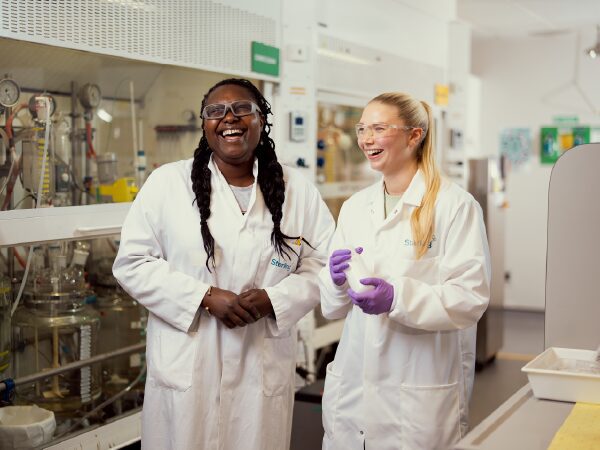

Sterling Snapshot | Paul Malone – Manufacturing Unit Head
Paul Malone joined Sterling’s Cork facility in 2015 and now oversees the site’s manufacturing function as our Manufacturing Unit Head.
 Can you describe your background?
My degree is in chemical engineering from University College Dublin. I then did my Master of Business Administration at the University College Cork in 2002.
I’m from Dublin, but moved to Cork take up a role with Eli Lilly as a Process Engineer. I went on to work in technology transfer, operations management, HR management, and then some organisational development and process engineering.
In 2015, I joined Novartis in a global strategic planning role. This involved working with a network of small molecule sites across the globe on strategic planning, looking at long term capacity, and business cases for investments and development of the business.
I moved to the Novartis’ Cork manufacturing facility, which was acquired by Sterling in 2023, as Head of Science and Technology, which then broadened to include engineering. In 2020, I became the Manufacturing Unit Head at the site.
Can you tell us about your role as Manufacturing Unit Head?
I oversee the manufacturing operations at Sterling’s Cork facility. Within the manufacturing function, there’s a large team of operations personnel supported by technical staff. Our site runs 24/7 and we manufacture a range of small molecules, from traditional APIs, to peptides, to products that are purified using large scale chromatography technologies. We make greater than 80 tonnes of certain products and kilos of others within in a year.
The technical support team oversee process execution and make sure that plant and equipment is set up and working correctly for a safe and high quality manufacturing campaign.
An essential part of my role is ensuring that we manufacture safely, to a high quality, and deliver to our customers’ expectations.
I also sit on the site leadership team (SLT) at the Cork facility, where myself and other members work together to evolve the site’s culture and way of working. This gives me the opportunity to partner with other site functions to ensure we are making the right decisions for the business. It’s a very collaborative approach to decision making.

ROLE
Manufacturing Unit Head
JOINED
February 2015
EDUCATION
Master’s in Business Administration, University College Cork
Bachelor of Engineering (Chemical), University College Dublin
How do you ensure that our manufacturing operations meet and exceed the needs of our customers?
We work very closely with our customers and listen to their needs. We make sure that we have a production plan in place that organises all the activities associated with a manufacturing campaign, to ensure timely delivery of the product to our customers.
We’re in constant contact with our customers as the project progresses and is executed. We have customers visiting the site often, but we also communicate regularly to update them on progress and anything else we may need to discuss with them.
We prioritise and allocate our resources carefully and, when required, our teams are very flexible at responding to our customers’ requirements.
How do you effectively collaborate with our customers?
The Sterling values help guide our interactions with our customers every day, in turn, ensuring collaboration with our customers. Transparency with our customers in terms of project status, and keeping them informed of any challenges along the way allows us to build a strong relationship. Communication is also very important, and needs to be consistent and meaningful to allow us to collaborate effectively.
We ensure that we partner throughout the entire planning process, taking care to listen and understand our customers’ project requirements and building a plan that aligns with these. Collaboration is an ongoing and iterative process, and we need to be flexible and agile to ensure we can support our customers to the best of our ability.
We have a big pharma heritage at the site, having previous fallen under that umbrella ourselves, so our facility is designed to be able to support scale-up throughout the product lifecycle. It’s also provided us with a strong insight into big pharma supply chains, meaning we are more conscious of downstream manufacturing and have had a lot of exposure to the patients that eventually take the drugs we are helping to produce, which helps drive our passion. Due to our big pharma heritage, we have always had a strong quality culture and we’ve carried that with us into the CDMO space, which really aligned us well with the rest of the Sterling network.
“Collaboration is an ongoing and iterative process, and we need to be flexible and agile to ensure we can support our customers to the best of our ability.
”
How do you ensure effective collaboration with other sites in the Sterling network?
We have a highly collaborative internal tech transfer process, ensuring strong lines of communication between our teams every step of the way to ensure success for our customers. Often, our team will visit the transferring site within our network to help fully understand the process and to speak with the subject matter experts and their counterparts to ensure a comprehensive understanding of the process.
We also share best practices with other Sterling sites and are always open to learning from others and sharing what we do well.
What is your favourite thing about working at Sterling?
I enjoy having the opportunity to work with a variety of different customers, to help evolve not only the site, but Sterling as a whole. It’s a fast paced work environment which makes every day exciting.
Everyone at Sterling has a strong “can do” attitude, so it’s good to work with likeminded people to achieve our goals.